
Sunk Cost Fallacy: When Portfolio Managers Hold On Too Long
- Moksha Sharma
- Sep 1, 2025
- 4 min read

Updated: Sep 3, 2025
“If you’ve already dug yourself into a hole, throwing more shovels at it won’t build a ladder.”
In theory, portfolio management is about rational choices. You evaluate the market, assess the numbers, and decide where the next rupee, dollar, or euro should go. In practice, emotions, pride, and human psychology sneak in. One of the most powerful traps? The sunk cost fallacy - the tendency to hold on to an investment simply because too much has already been poured into it.
We tell ourselves: “We’ve come this far; we can’t stop now.” But investing doesn’t work like climbing a mountain where persistence eventually gets you to the top. In capital markets, yesterday’s money is already gone. The only thing that matters is what the next dollar can do.
A Classic Lesson: The Concorde Project
The most famous metaphor for sunk cost isn’t from Wall Street at all; it’s from aviation. In the 1960s and 70s, Britain and France poured billions into developing the Concorde, a supersonic passenger jet. The project was plagued with overruns, engineering headaches, and limited commercial viability. Analysts warned it would never be profitable. But governments kept funding it. Why?
Because billions had already been spent. Abandoning it would be an admission of failure. For decades, the Concorde flew - sleek, iconic, but bleeding money every single mile.
This became known as the “Concorde Fallacy”- throwing good money after bad because past costs weigh more heavily in our minds than future returns.
Investors do this all the time.
The Anatomy of the Fallacy
Elucidation: Sunk cost fallacy is the refusal to cut losses because past investments - in money, time, or reputation; feel “too valuable” to waste.
The Error in Thinking: We let past commitments dictate future decisions.
The Emotional Driver: Admitting a loss feels worse than risking a bigger one.
In truth, yesterday’s investments are unrecoverable. Rational decision-making must focus only on what capital can achieve going forward.
Why Portfolio Managers Hold On Too Long
Ego & Reputation:
Selling means admitting you were wrong. And in the investing world, few things sting more than being wrong in front of peers, clients, or LPs.
Fear of Judgment:
Questions like “Why did you back this in the first place?” loom larger than the actual financials.
Hope & Optimism Bias:
Investors confuse persistence with prudence. “If we just wait another quarter, this will turn around.”
Paper vs. Realized Losses:
It’s easier to keep losses hidden on paper than to lock them in with a sale.
Escalation of Commitment:
Throwing more capital in feels like “protecting” the earlier bet, even if it only deepens the hole.
Case Studies: When Holding On Hurt
BlackBerry: Loyal investors held as the smartphone revolution left it behind, convinced its loyal base and keyboard nostalgia would carry it through. They were wrong.
Yahoo!: In 2008, Yahoo! turned down Microsoft’s $44 billion acquisition offer, unwilling to “sell cheap” after years of investment in its ecosystem. Less than a decade later, it sold for just $4.8 billion.
Venture Capital Portfolios: Many startups limp along on endless “bridge rounds.” They aren’t alive because they’re thriving - they’re alive because investors can’t stomach writing them off.
Each case reflects the same core bias: “We’ve already spent too much to walk away.”
The Investor’s Blind Spot
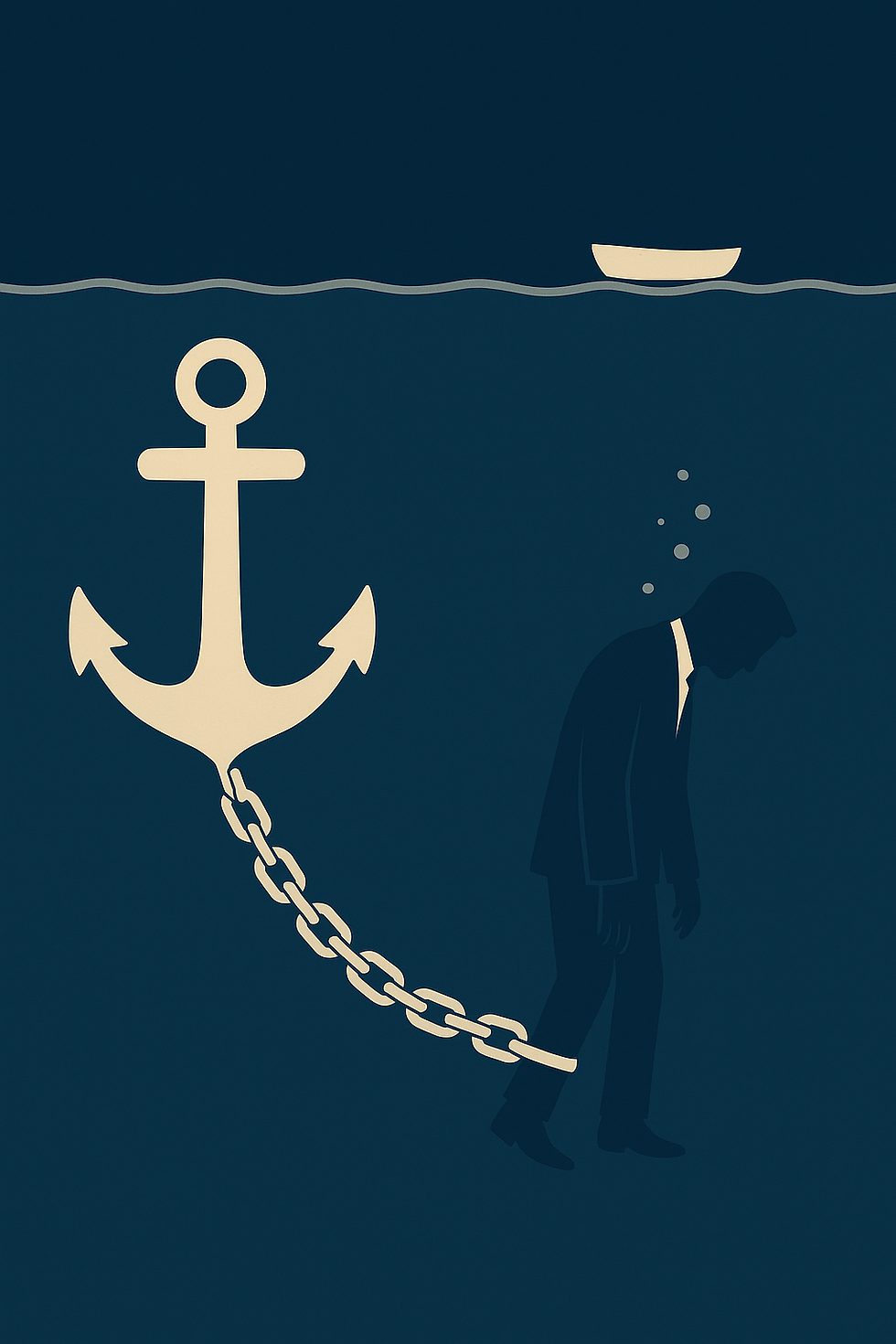
The sunk cost fallacy doesn’t only drain portfolios. It also blocks better opportunities. Every dollar stuck in a failing bet is a dollar not invested in the next winner. By clinging to the past, managers mortgage the future.
This is where it ties back to other biases we’ve covered in this series:
Survivorship Bias: Idolizing past winners makes us forget how many losses were dragged out too long.
Confirmation Bias: Once committed, we search for evidence to justify staying in.
Sunk Cost Fallacy: The lock that keeps us stuck, even when reality is screaming at us to move on.
The “bias stack” is powerful: first you overvalue the survivors, then you ignore the evidence, and finally you refuse to let go.
Escaping the Trap
How do professional investors cut free from sunk costs?
Reframe the Question: Instead of “How much have we already invested?” ask “Would I put fresh capital into this today?”
Establish Kill Criteria ("Kill Switch"): Before investing, set clear milestones (growth rates, customer traction, margins). If they’re missed, pull back.
Independent Reviews: Outsiders- investment committees, advisors, even AI-driven models can flag when emotional attachment clouds judgment.
Normalize Smart Exits: Celebrate when capital is saved by cutting early. Walking away isn’t weakness; it’s discipline.
Closing: The Courage to Cut
The hardest decision in investing is often not buying, but selling. Not because the math is unclear, but because psychology gets in the way. Sunk cost fallacy reminds us that past money is gone forever. What matters is the opportunity cost of holding on. In the end, investors who thrive are not those who never make mistakes, but those who recognize them early and move on.
Because in portfolio management, the greatest danger isn’t being wrong. It’s staying wrong for too long.



This really made me rethink, especially the part about “throwing more shovels at the hole.” & "Every dollar stuck in a failing bet is a dollar not invested in the next winner." It made me realize how easy it is to confuse persistence with progress. In investing, that mindset doesn’t just trap capital, it blinds us to better opportunities.